

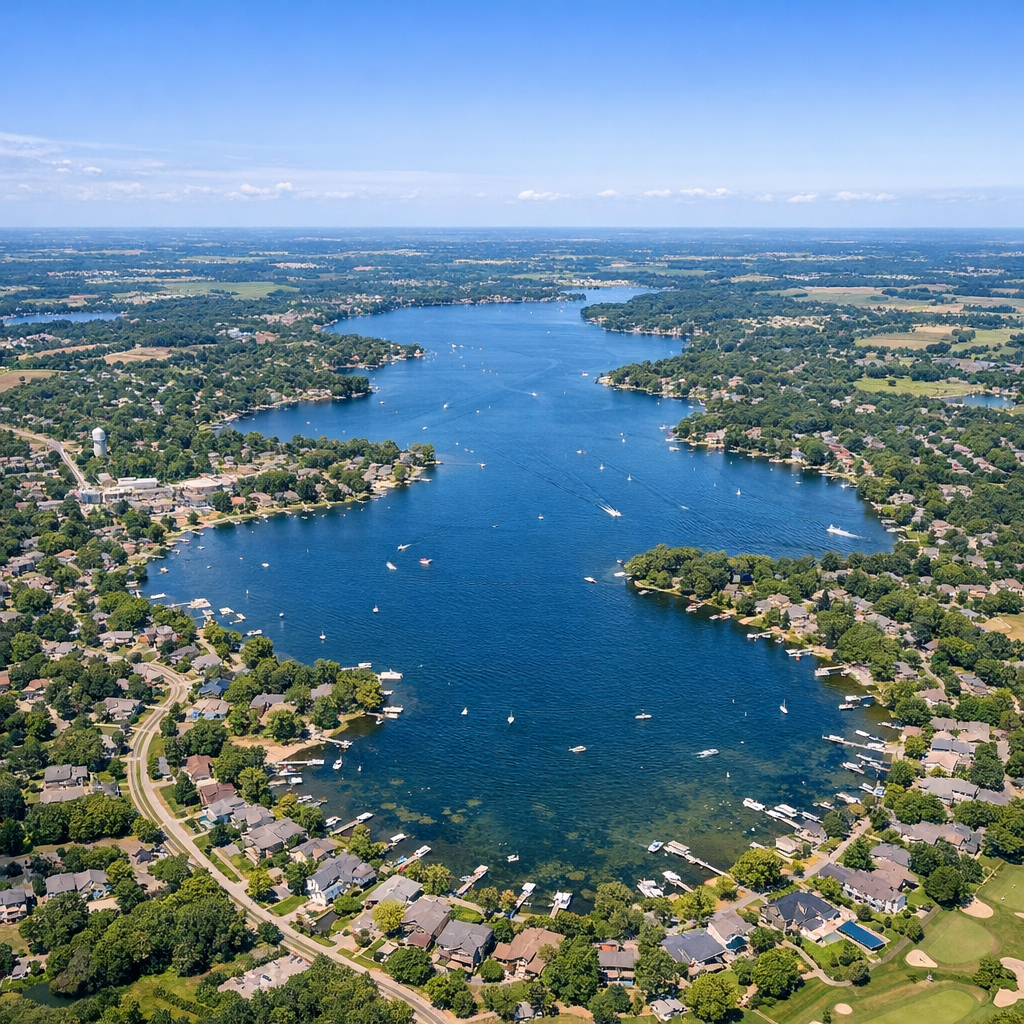
Prior Lake, Minnesota, experiences a humid continental climate characterized by warm summers and cold winters. Average high temperatures range from 23.1°F in January to 82.3°F in July, with annual precipitation averaging 33.13 inches.
The city is home to 15 lakes, with Upper and Lower Prior Lake being the largest, covering over 1,340 acres combined. These lakes are central to the community’s recreation and ecology but face environmental challenges.
Water quality is a significant concern. Upper Prior Lake is considered “impaired” due to high phosphorus and chlorophyll levels, leading to algae blooms. Efforts to improve water quality include reducing carp populations, managing aquatic plants, and controlling nutrient inflow from upstream sources.
Shoreline erosion is another issue, exacerbated by varying water levels, wave action, and ice movement. The city encourages residents to adopt lakescaping practices, such as planting native vegetation buffers, to stabilize shorelines and prevent erosion.
Climate change poses additional challenges. Minnesota has seen a decline in lake ice coverage, averaging 10-14 fewer days over the past 50 years. This trend affects recreational activities and can lead to warmer water temperatures, promoting harmful algae blooms and impacting fish populations.
Residents can contribute to environmental preservation by:
- Properly disposing of yard waste to prevent nutrient runoff.
- Using fertilizers sparingly and avoiding phosphorus-based products.
- Maintaining natural vegetation along shorelines to reduce erosion.
By understanding and addressing these climate and environmental challenges, the Prior Lake community can work together to protect and enhance the health of its cherished lakes and natural resources.