

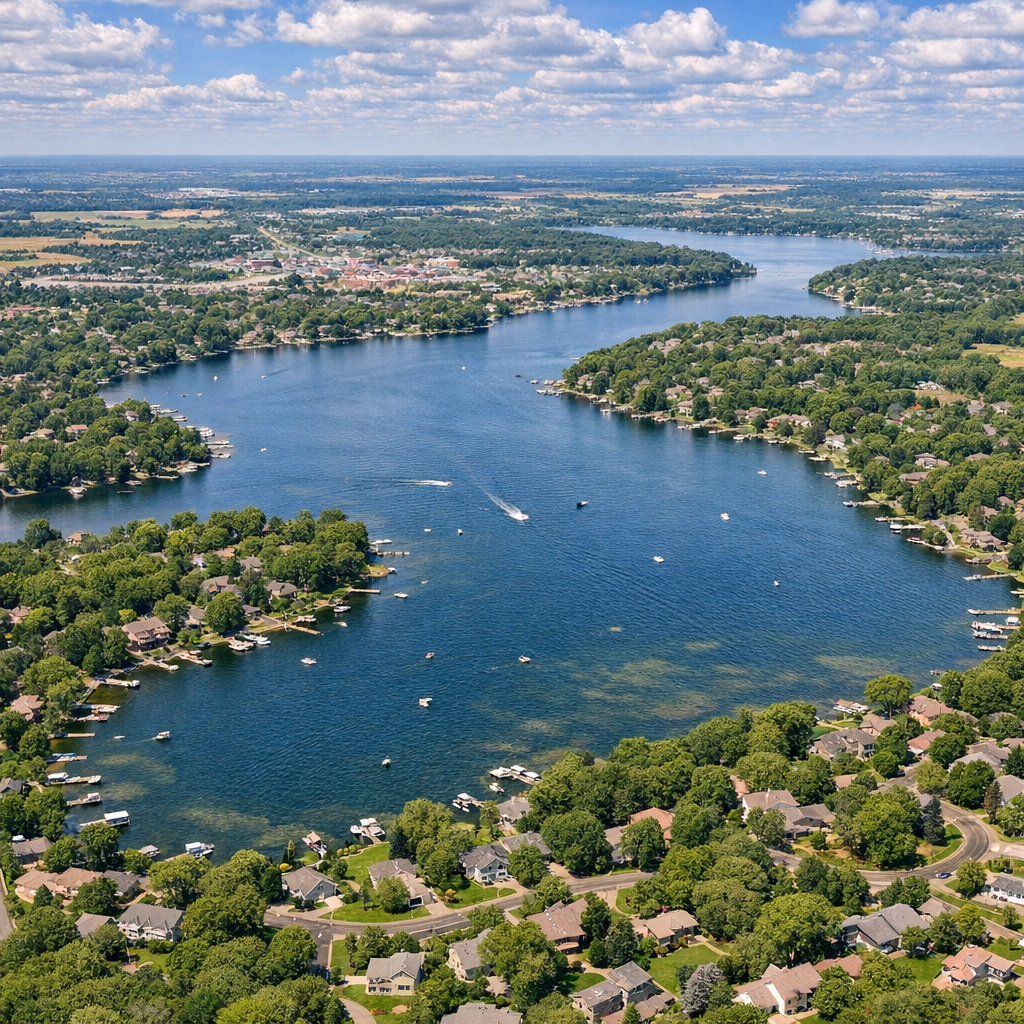
Prior Lake, Minnesota, experiences a continental climate characterized by warm summers and cold winters. Average temperatures range from 8°F in the winter to 83°F in the summer. The city receives approximately 31 inches of precipitation annually, contributing to its diverse natural environment.
Water Quality Concerns
The health of Prior Lake’s water bodies is vital for both ecological balance and recreational activities. Residents can help maintain water quality by:
- Sweeping dirt, leaves, and grass clippings from streets.
- Preventing and controlling soil erosion, especially on active construction sites.
- Composting lawn clippings, leaves, and pet waste, and ensuring they do not wash into storm drains.
- Using lawn fertilizers sparingly and only when a soil test recommends it, and never using banned phosphorus fertilizers.
- Leaving a buffer of natural vegetation between manicured lawns and nearby water bodies.
- Keeping vehicles well-tuned and leak-free.
- Never dumping household chemicals or motor oil down the drain or onto land.
These practices help reduce nutrient runoff that can lead to undesirable effects like algae blooms and floating mats of vegetation.
Shoreline Preservation
Maintaining healthy shorelines is crucial to prevent erosion and protect aquatic habitats. Factors contributing to shoreline erosion include varying water levels, wave energy, improperly constructed retaining walls, steep slopes, ice action, and mowing to the water’s edge. The Minnesota Department of Natural Resources (DNR) provides extensive information on erosion issues and shoreline alteration. Homeowners are encouraged to consult these resources and obtain necessary permits before undertaking shoreline projects.
Climate Change Impacts
Climate change poses significant challenges to Prior Lake’s environment. Warming temperatures and shifting weather patterns threaten native plants and animals. For instance, northern tree species like paper birch and black spruce may decline, while species like maples and oaks could become more prevalent. Additionally, higher temperatures and increased stormwater runoff can lead to more frequent algae blooms in lakes, negatively impacting fish populations and water quality.
Understanding and addressing these environmental challenges is essential for preserving Prior Lake’s natural beauty and ensuring the well-being of its residents and wildlife.