

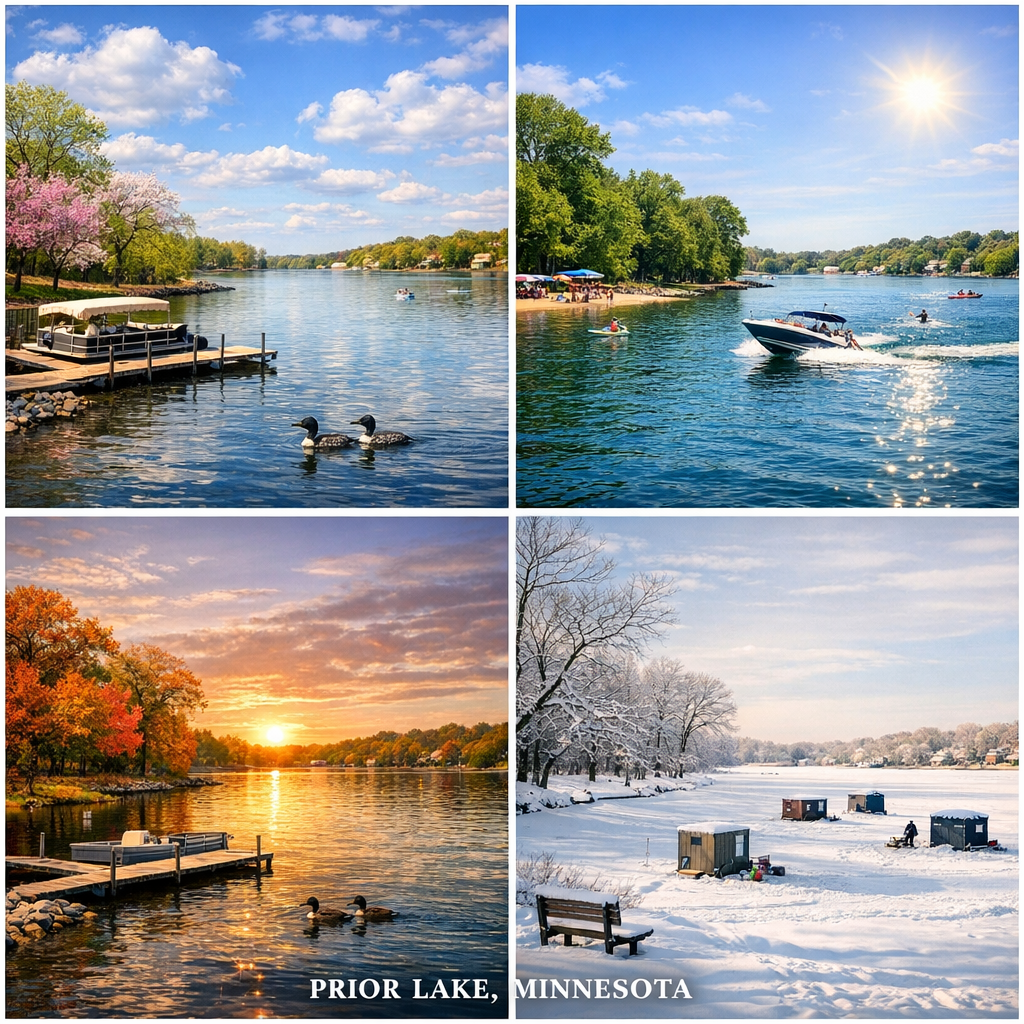
Prior Lake, Minnesota, experiences a diverse range of weather conditions throughout the year, characteristic of a humid continental climate. Understanding these patterns is essential for residents to prepare for seasonal changes and address environmental concerns.
Seasonal Weather Patterns
Winter: Spanning from late November to early March, winters in Prior Lake are cold and snowy. Average low temperatures in January can drop to around 9°F (-13°C), with highs reaching approximately 23°F (-5°C). Snowfall is common, contributing to the region’s winter landscape.
Spring: Transitioning from March through May, spring brings milder temperatures and increased precipitation. Average highs in April reach about 55.7°F (13°C), with lows around 35.5°F (2°C). This season often sees a mix of rain and the occasional late snowfall.
Summer: From late May to mid-September, summers are warm and humid. July, the warmest month, typically has average highs of 82°F (28°C) and lows around 63°F (17°C). Thunderstorms are more frequent during this period, contributing to higher precipitation levels.
Autumn: September through November marks the fall season, characterized by cooler temperatures and decreasing humidity. October averages highs of 58.7°F (14°C) and lows of 38.6°F (3°C), with vibrant foliage marking the landscape.
Environmental Considerations
Prior Lake’s environment is influenced by its weather patterns and human activities. The city monitors public beaches, such as Sand Point Beach and Watzl’s Beach, for E. coli levels to ensure public health and safety. Weekly water samples are collected from Memorial Day through Labor Day, and beaches are closed if E. coli levels exceed safe thresholds. Residents are encouraged to report any stormwater system issues, such as sediment flow or unauthorized dumping, to the Public Works Department at 952-447-9896.
Understanding and adapting to Prior Lake’s climate and environmental factors is vital for maintaining the community’s health and preserving its natural resources.